Domaine Shaps in Meursault. Cheese and WineDomaine Shaps in Meursault. Cheese and Wine
©Les Conteurs -Domaine Shaps in Meursault. Cheese and Wine

Tastings on the Côte de Beaune enjoy a unique experience in the Côte-d'Or!

Beaune isthe undisputed wine capital of Burgundy and a key stop on the Route des Grands Crus de Bourgogne, inviting you to take a journey to the heart of the art of wine tasting. Behind its medieval ramparts and cobbled streets, you’ll find centuries-old cellars where the great wines of the Côte de Beaune flourish. Between historic houses, family estates and wine châteaux, each tasting is an encounter: that of a terroir, a know-how and a passion handed down from generation to generation.

Here, Pinot Noir and Chardonnay reveal all their nuances. Whether you push open the doors of Château de Meursault, Domaine Besancenot or Maison Chanzy, every cellar visit in Beaune is a sensory experience, guided by the richness of the Climats, a UNESCO World Heritage Site. Whether you’re a couple, a group of friends or just curious, get ready to savour Burgundy in all its diversity… always with a glass in your hand!

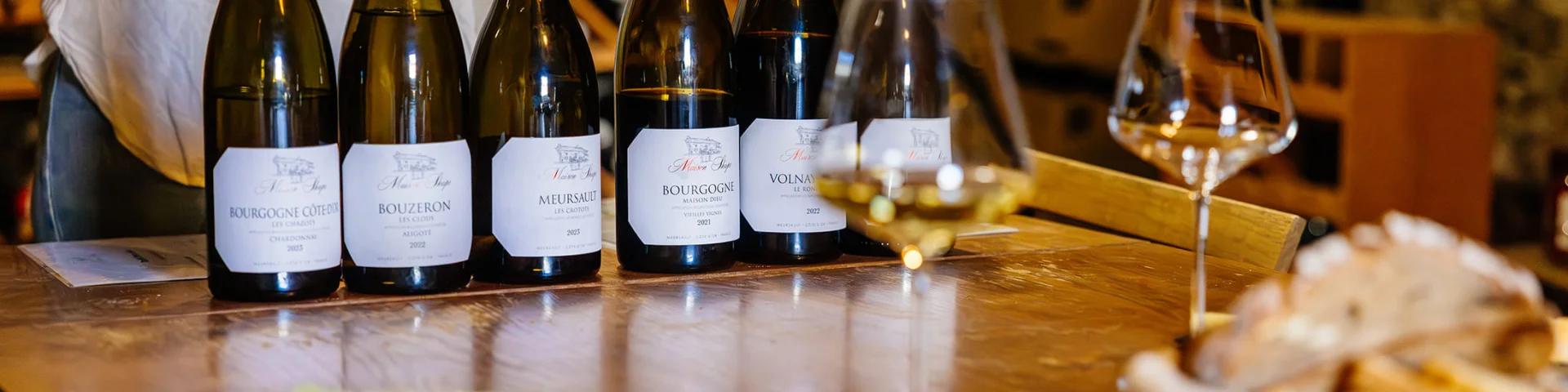
FAQ - Everything you need to know about wine tasting in Beaune
  • What makes the Beaune vineyards so special?

    The Beaune vineyards occupy a central position in the Burgundy wine region. It is here that some of the greatest climats are produced, parcels of land meticulously delimited according to soil type and exposure. The vineyards stretch from Pommard to Savigny-lès-Beaune, via Meursault and Puligny-Montrachet. Each appellation has its own personality: powerful red wines, elegant, aromatic whites, exceptional crus from historic houses and family estates. Beaune embodies this diversity and refinement, a blend of tradition and modernity.

  • Where can you go for a wine tasting in Beaune?

    Beaune’s historic centre is packed with wine-tasting cellars within walking distance. Visitors can discover the famous Maison Henri Villamont and Maison Jean Boillot, as well as more confidential estates such as Baptiste Guyot and Loubet Dewailly. Around the town, the wine-producing villages of Pommard, Meursault and Puligny-Montrachet are home to numerous estates open to visitors. Some experiences include a visit to the vineyards or a wine and food pairing workshop to extend the experience.

  • Can you visit the cellars of the Hospices de Beaune?

    A symbol of the town, the Hospices de Beaune are inextricably linked with its winegrowing history. Every year, their auction attracts wine lovers from all over the world. If you can’t visit the Hospices de Beaune cellars directly, a number of partner wineries offer tastings of Hospices de Beaune wines, giving you the chance to discover these rare and emblematic vintages from exceptional plots of land on the Côte de Beaune.

  • How does a visit to a Beaune cellar work?

    A cellar tour in Beaune lasts between 1 and 1? hours on average. It generally includes a tour of the estate, an explanation of winemaking techniques and a commented tasting of several vintages. Some premium experiences extend the visit with an oenological workshop or an introduction to aromas, particularly around the Chardonnays of Meursault or the Pinot Noirs of Pommard. In all cases, the tasting experience is a moment of sharing and emotion.

  • How much does a wine tasting in Beaune cost?

    Prices vary according to the package chosen. Discovery tastings start at around ten euros. For more comprehensive experiences, including a tour of the estate and cellars, prices are in the mid-range. Prestige tastings or wine and food pairings can fetch slightly higher prices, particularly at wine châteaux or for rare vintages. Some cellars deduct the cost of the visit from the price of the bottles purchased.

  • When is the best time for a wine tasting in Beaune, on the Burgundy Grands Crus Route?

    From May to October, the Côte de Beaune is decked out in its finest colours and the cellars come alive. Spring is the time to enjoy the soft light and flowering vines, while autumn, the harvest season, reveals all the magic of the wine-growing landscapes. In winter, wine tastings become more intimate, often accompanied by an open fire and a warm welcome from the winegrowers. It’s also the time of year for the Hospices de Beaune wine auction, a not-to-be-missed event.

  • Where can I book a wine tasting in the Côte de Beaune?

    It is advisable to book your tasting in advance, especially in high season. Reservations can be made directly with the estates, houses or châteaux via their websites. The Beaune Tourist Office and several local agencies also offer wine tours along the Route des Grands Crus de Bourgogne. Some include transport, guided tours and even wine and food pairing lunches in the wine villages.

  • What types of wine can you enjoy on the Côte de Beaune?

    Beaune and the surrounding area offer a wide range of crus, from red to white:

    • Red wines made from Pinot Noir (Pommard, Volnay, Savigny-lès-Beaune) are seductive for their structure and complexity.
    • White wines made from Chardonnay (Meursault, Puligny-Montrachet, Santenay) are distinguished by their buttery, floral aromas.

    During the tastings, the winegrowers often show several vintages, allowing you to appreciate the evolution of the wine over time and the uniqueness of each climate.

  • Is it possible to go wine-tasting on the Côte de Beaune without a car?

    The town of Beaune is perfect for exploring on foot or by electric bike! Many wineries and houses are located within minutes of each other. For estates further afield, guided tours are available: by minibus, by bike or even in vintage vehicles, along the Route des Grands Crus de Bourgogne. These tours include several tasting stops, walks through the vineyards and sometimes even gourmet breaks.

  • Are there any oenology courses on the Côte de Beaune?

    Yes, a number of wine houses offer oenology courses to help you recognise aromas, understand climates and master the basics of wine tasting. These workshops are aimed at novices and enthusiasts alike. Some estates, such as Château de Meursault, organise tailor-made introductory courses, combining theory, practice and commented tasting of Burgundy wines.

  • What family-run wine cellars are there to discover in the Beaune region?

    Around Beaune, a number of family-run estates passionately perpetuate the winegrowing know-how handed down from father to son. These wineries, often located in the wine-producing villages of the Côte de Beaune, open their cellars for friendly, authentic tastings. These include Domaine Besancenot, Domaine Marguerite Carillon and Domaine Comte Senard in Aloxe-Corton. Here, a visit is like meeting a family and its estate, sharing experiences, anecdotes and tasting red and white wines from the Burgundy terroir.

  • Which châteaux and estates to visit around Beaune?

    The Beaune region boasts a number of wine châteaux where tradition and elegance come together. Château de Meursault, Château de Pommard and Château de Chassagne-Montrachet are among the must-see sites. These exceptional sites often house vast vaulted cellars and centuries-old galleries where the great vintages of Burgundy are laid to rest. Each estate offers a range of options to suit all visitors: discovery tastings, guided tours, or introductory workshops focusing on the emblematic red and white wines of the Côte de Beaune. These experiences give visitors a better understanding of the richness of a unique winegrowing heritage in the heart of Burgundy.